
The words
Fourteen words from the texts, with their characters and pinyin. The seal 古 gǔ marks an old word, the seal 今 jīn a modern wording.
shì
Posture, or potential
In Qī Jìguāng 戚继光, a posture. In Sūnzǐ 孙子, the force of a configuration.
dìngshì · wú dìngshì
Fixed posture, no fixed posture
Boxing has fixed postures. In use, there is no longer any fixed posture.
jīngfǎ · qǔfǎ
Threaten, attack
The threat makes the opponent react without touching him. The attack really seeks to reach him.
xūshí
The empty and the full
The art of using them depends on the person, says the Wǔbiān 《武编》.
chángquán · duǎndǎ
Long boxing, short boxing
At close quarters, short boxing. At a distance, long boxing.
pāi
Time, the beat
To know the pāi is to know the right moment.
huāfǎ
The flowers
Under the Míng, decorative movements, good to look at but of no use.
shìdí
Testing oneself against an opponent
For Qī Jìguāng 戚继光, whoever has acquired the art must put it to the test.
wǔyì
The martial art
The word used by Míng authors. It is in our name.
guóshù
The national art
The word that takes hold between 1927 and 1928.
wǔshù
Wushu
The official name since 1954.
gǔdiǎn wǔyì
The classical martial art
A modern expression, used by the historian Mǎ Míngdá 马明达 as early as 2000.
tàozi · páizi
Solo form, paired form
Two words from the staff of Línxià 临夏, reported by Mǎ Míngdá 马明达.
huóbǎ · sǐbǎ
Moving grip, fixed grip
Two ways of holding the staff.
Practice
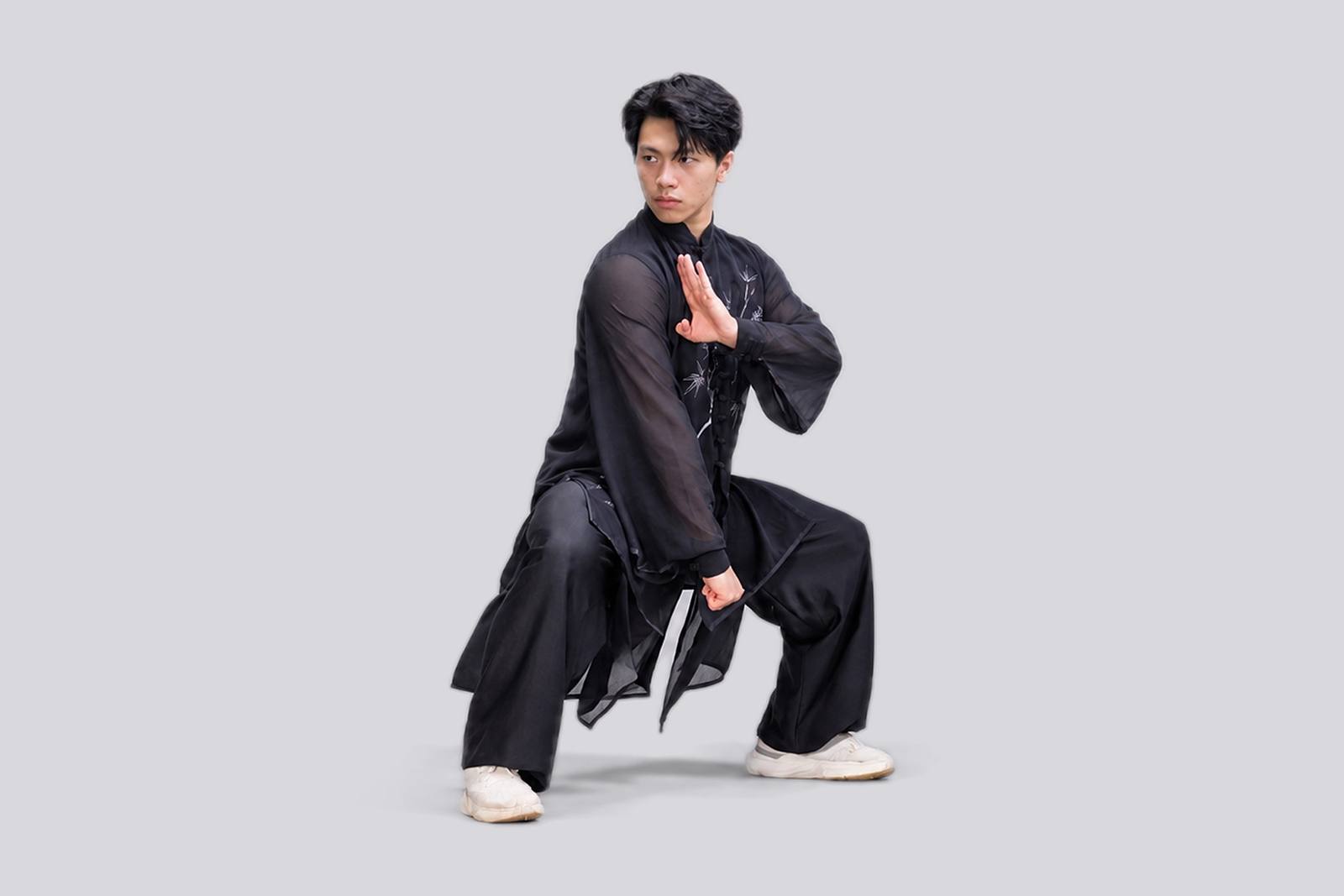
The Wuyi program is taught in Angers, Cholet and Nantes, to teenagers and adults.