

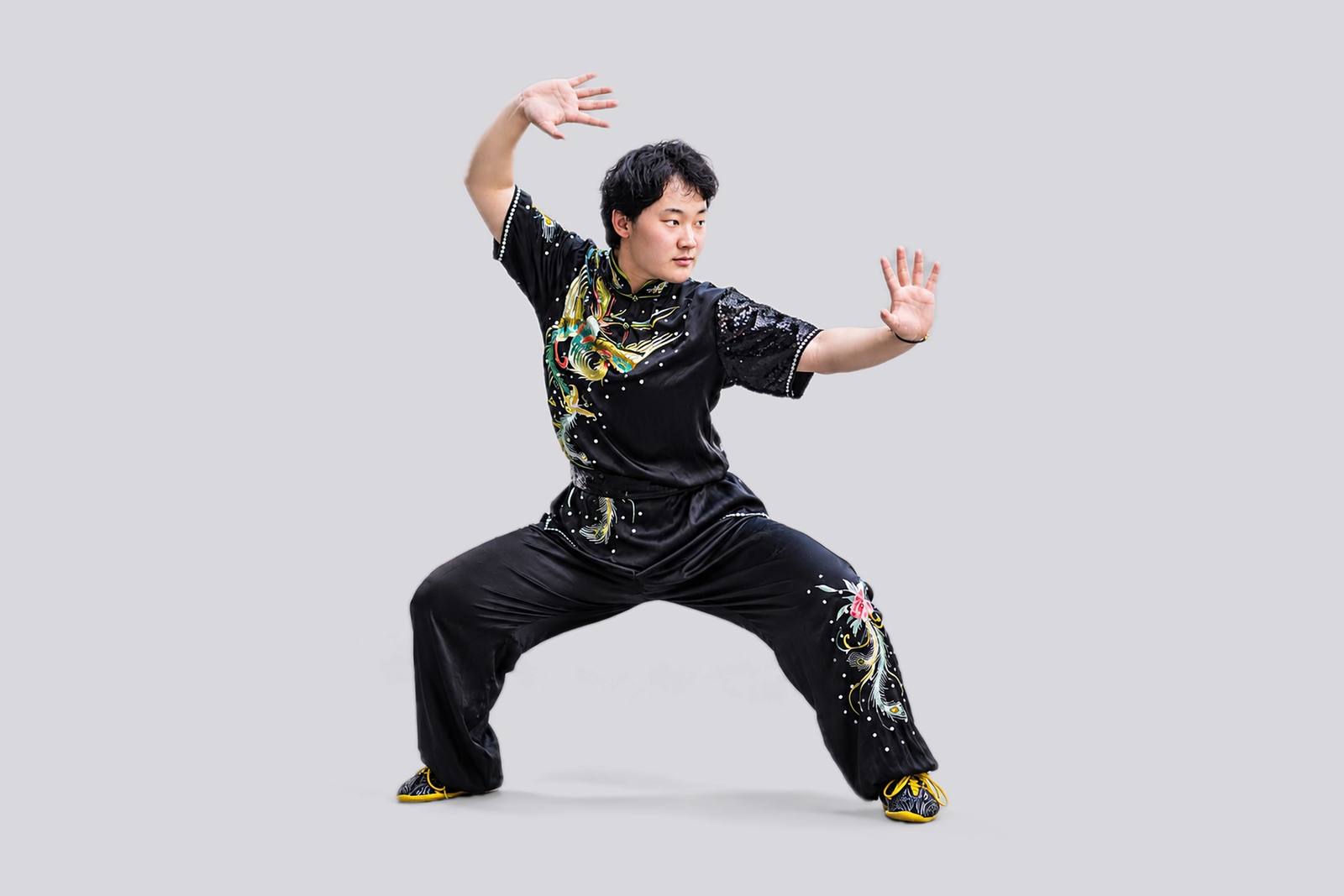
Three styles, three distances
For each one, we say what the texts allow us to state, and with what degree of evidence.
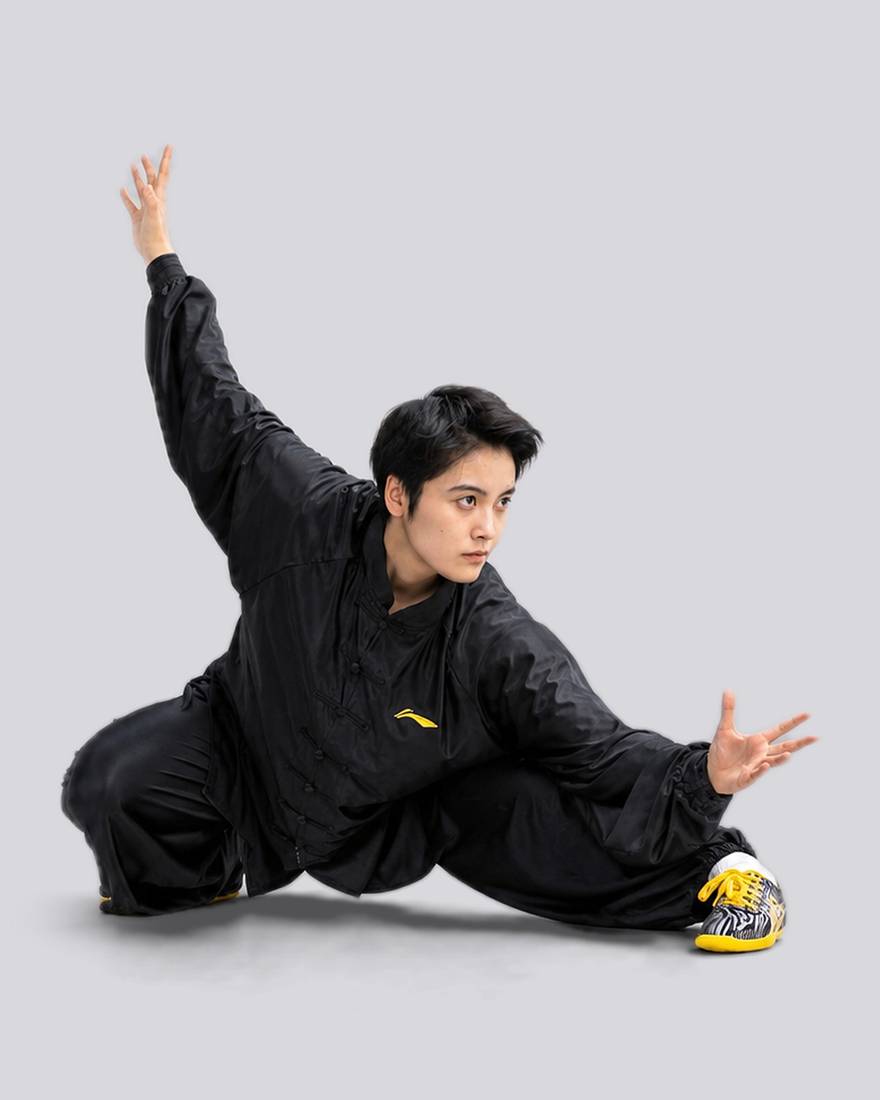
Long range
劈挂掌
Pīguàzhǎng · Chop and hang
The arms swing like whips, from shoulder to hand, driven by a supple waist.
劈 Chop pī
Strike downwards, arm extended.挂 Hook guà
Deflect the attack with a circular movement.腰 The waist yāo
The axis that launches the arms.
Before 1560“
证Attested : the name, under the Ming
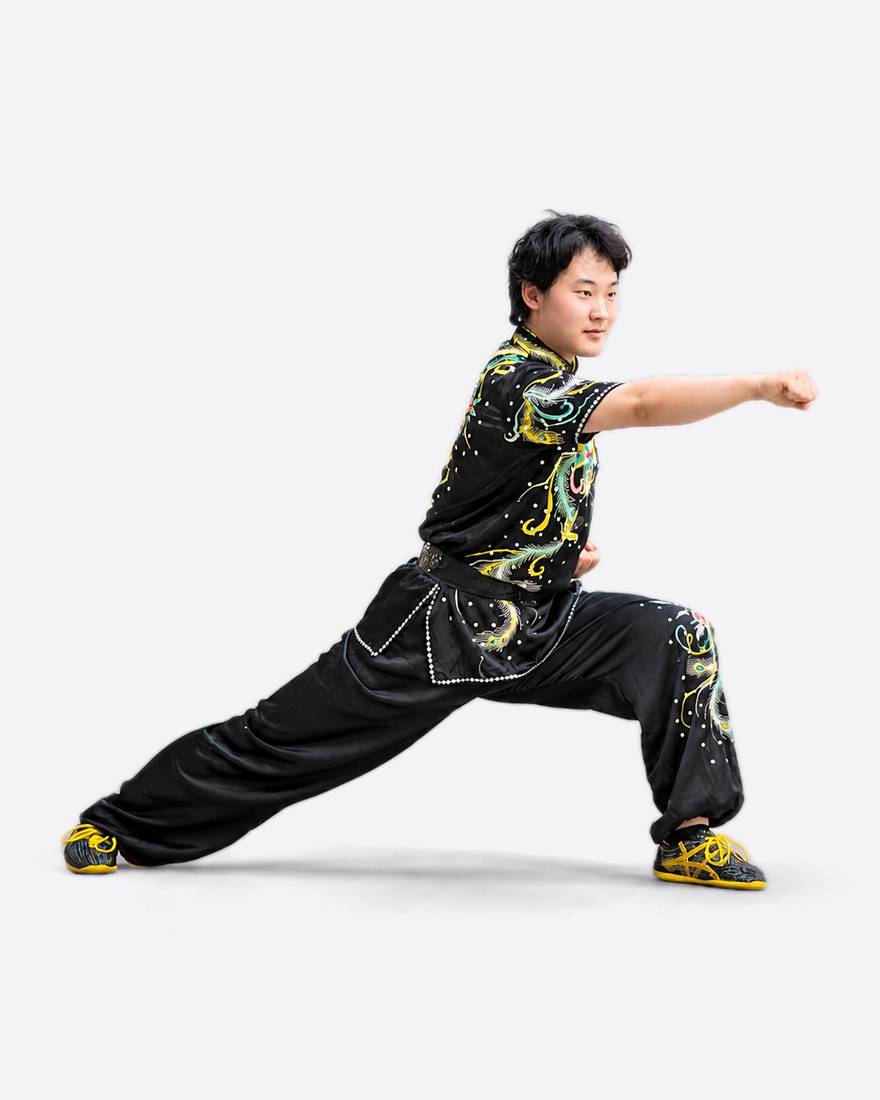
Fast and tight
翻子拳
Fānziquán · Tumbling fist
Short sequences in which both fists strike in bursts, with no pause.
快 Fast kuài
Both hands go without waiting.密 Tight mì
The blows follow one another, with no gap.翻 Turn fān
The fists roll and change direction.
1561-1562“
可Probable : link established through the name
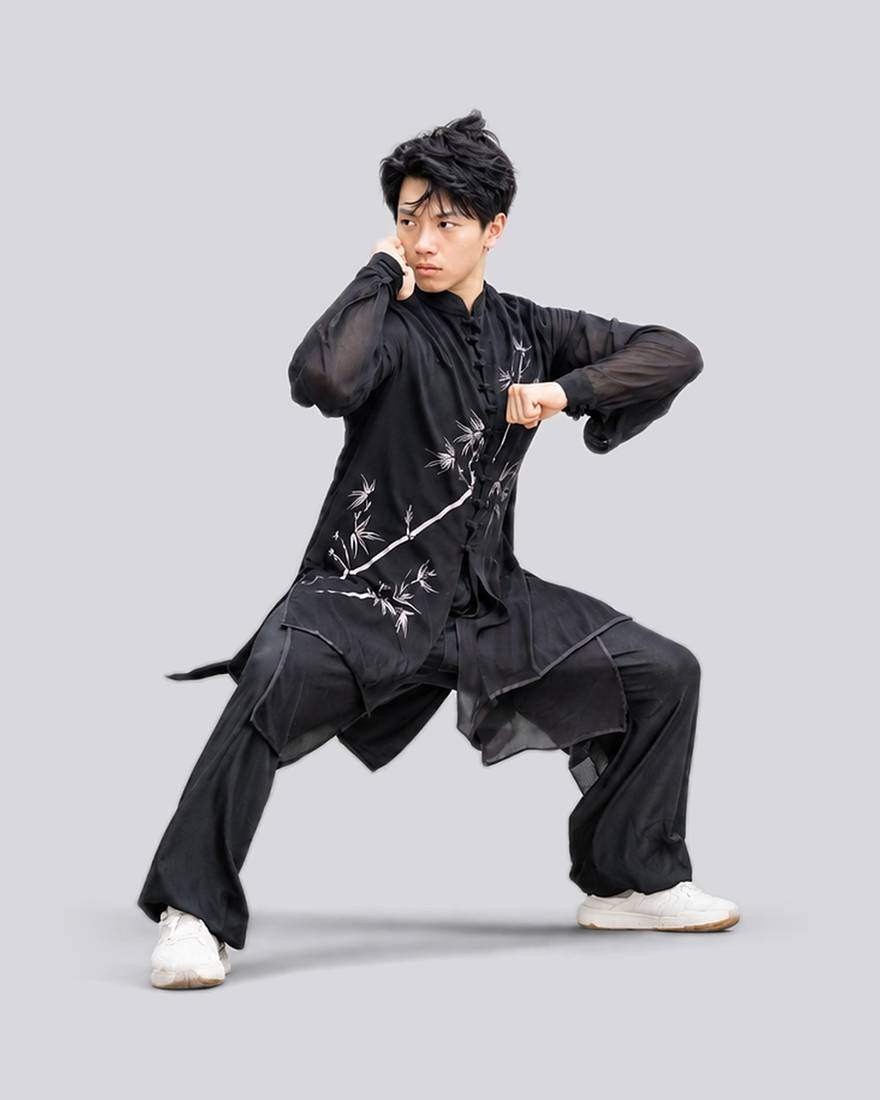
Close range
八极拳
Bājíquán · Eight extremes
You close in and strike with the whole body, in one short, explosive blow.
震 Stamp the ground zhèn
Power starts from the foot stamping the ground.靠 Lean in kào
Press against the opponent: shoulder, back.肘 The elbow zhǒu
Short strikes, at the closest range.
18th centuryWú Zhōng
证Attested : since the 19th century
And three weapons
They are practiced alongside the three styles.