
The topics / Styles and weapons
Three styles: what the sources say
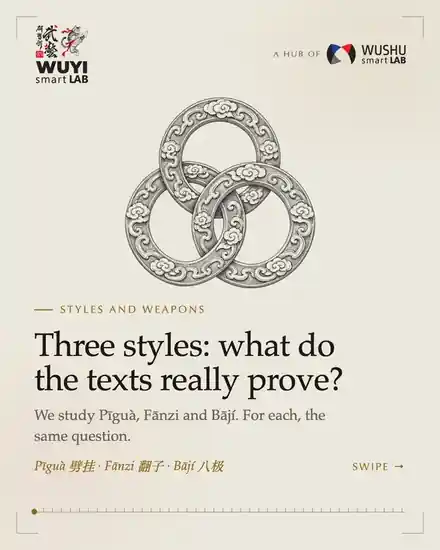
We study three styles, Pīguà 劈挂, Fānzi 翻子 and Bājí 八极.
Video on April 29, 2027
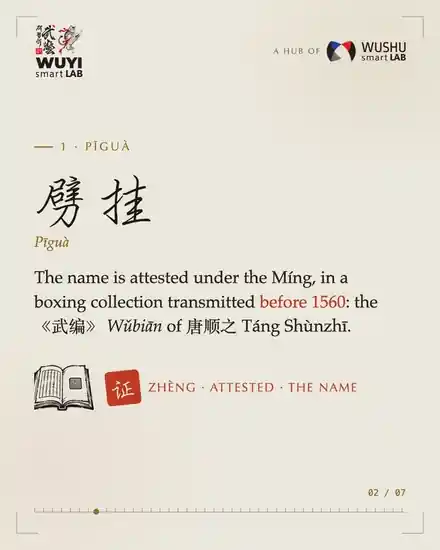
An excerpt from the carousel
The first pages. The rest comes out on our social media.
References
The sources for this topic, in APA 7 format.
- Wuyi Smart Lab. (2026). What is a classical Chinese martial art? Working definition [Internal document, 15 November 2026].
- Táng, S. (n.d.). Táng Jīngchuān xiānshēng zuǎnjí Wǔbiān 唐荊川先生纂輯武編 [Martial compilation] (H. Jiāo, Rev.) [Facsimile of the Mànshān guǎn edition, shelfmark NCL-05726]. National Central Library, Taipei. (Original work composed before 1560)
- Qī, J. (n.d.). Jìxiào xīnshū 紀效新書 [New treatise on military efficiency] (Vol. 5, juàn 12-14) [Facsimile, shelfmark NLC892-411999026990-157839]. National Library of China, Beijing. (Original work published ca. 1562)
- Mǎ, M. (2000). Shuō jiàn cóng gǎo 说剑丛稿 [Essays on the sword]. Lanzhou daxue chubanshe.
All topicsBack to the listFind a club (in French)
Practice
The Wuyi program is taught in Angers, Cholet and Nantes, to teenagers and adults.