
The topics / Sūnzǐ 孙子 and the concepts
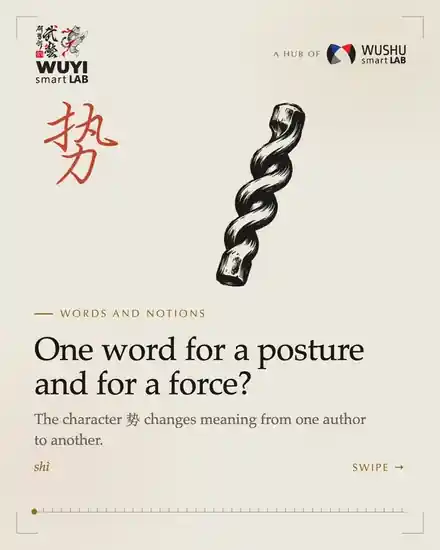
Shì 势: one word, two meanings
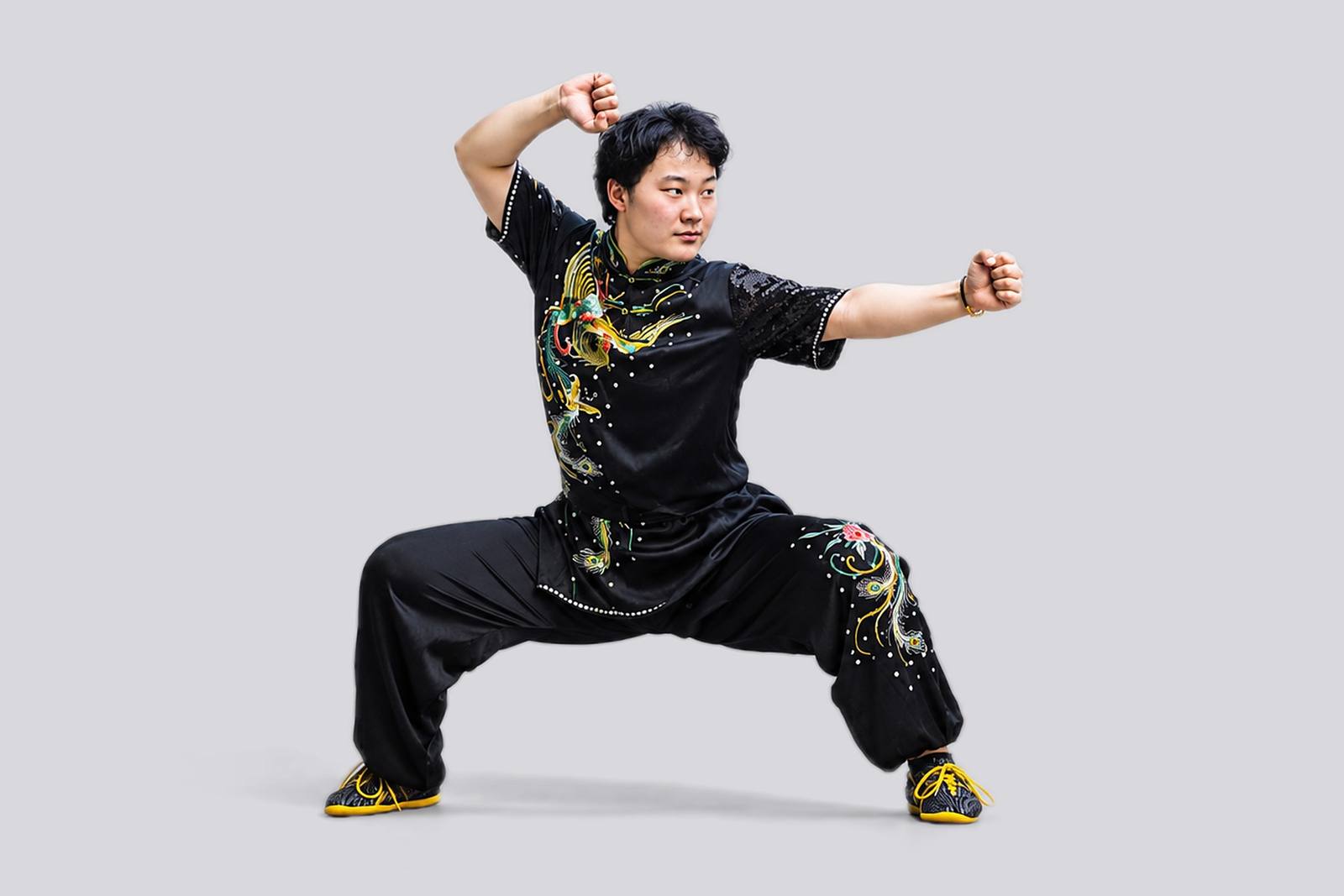
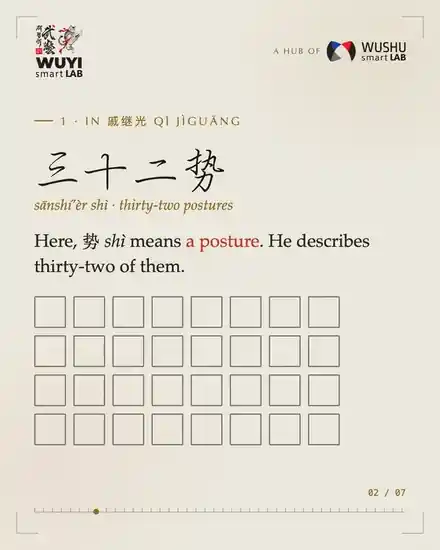
In Qī Jìguāng 戚继光, 势 refers to a posture: he describes thirty-two.
Video on April 3, 2027
An excerpt from the carousel
The first pages. The rest comes out on our social media.
References
The sources for this topic, in APA 7 format.
- Qī, J. (2001a). Jìxiào xīnshū 纪效新书 (shíbā juàn běn 十八卷本) [New treatise on military efficiency, eighteen-juàn recension] (W. Cáo & Y. Lǚ, Eds.). Zhonghua shuju. (Original work published ca. 1562)
- Sūnzǐ 孙子. (n.d.). Sūnzǐ bīngfǎ 孙子兵法 [The Art of War]. Received text, checked against two facsimiles (National Central Library, Taipei; National Library of China, Beijing). (Original work composed around the end of the 4th century BCE)
- Jullien, F. (1996). Traité de l’efficacité (pp. 29-35). Grasset.
All topicsBack to the listFind a club (in French)
Practice
The Wuyi program is taught in Angers, Cholet and Nantes, to teenagers and adults.